
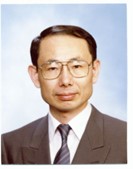
Koichi Shimizu received M.S. (1976) and Ph.D. (1979) degrees, from University of Washington, Seattle, USA. He was Research Associate in University of Washington 1974-79. He was an Assistant-, an Associate- Professors, and a Professor in Hokkaido University, Sapporo, Japan in 1979-2016. He is currently a Professor Emeritus of Hokkaido University, Japan, an Invited Research Professor of Waseda University, Japan and a Professor of Xidian University, Xi’an, China. He has been engaged in the studies of biomedical engineering including those of wave propagation in biological media, optical measurement, biotelemetry and biological effects of electromagnetic field. He served as an associate editor of IEEE Trans. ITB in 1999–2007. He has been a Fellow of the Electromagnetics Academy, and an editorial board member of Scientific Reports, Nature. He is a member of IEEE, OSA, ISOB, IEEJ, IEICE and JSMBE. He received Research Promotion Award (1981), Best Paper Award (1995) and New Technology Development Award (2020) from Japan Society for Medical and Biological Engineering.

Antonio Gloria is Professor of Design and Methods of Industrial Engineering at the University of Naples Federico II. He is also professor of “Bio-Inspired Generative Design for Additive Manufacturing” and co-Head of the Research Innovation Center of Regenerative Engineering and Additive Manufacturing - RICREAMI. He was a Senior Researcher at the National Research Council of Italy (CNR) (Institute of Polymers, Composites and Biomaterials – IPCB), and he is currently Associate Member/Researcher of the CNR-IPCB. Antonio Gloria is Associate Member and Visiting Professor of the CDRSP - Polytechnic Institute of Leiria, Portugal, as well as International Collaborator of the Singapore Centre for 3D Printing (SC3DP) - Nanyang Technological University (NTU), Singapore. He was and is involved in national and international projects. He also received international awards. He was awarded and appointed as “Future Leader” in Science and Technology (“Dialogue between Nobel Laureates and Future Leaders”, STS forum – October 2015, Kyoto, Japan). He is currently author of international papers, book chapters, communications/contributions in international and national conferences.

Prof. Beddiaf Zaidi is a Professor of Physics at the Department of Science and Technology, Echahid Cheikh Larbi Tebessi University, Algeria. He previously served at the Department of Physics, University of Batna 1, Algeria. He received his Ph.D. in Physics from the University of Annaba, Algeria, in 2014. His research focuses on advanced materials and photovoltaic applications. He has published numerous research articles in high-impact international journals and authored three academic books. Prof. Zaidi has extensive editorial experience. He served as Editor-in-Chief of the International Journal of Materials Science and Applications (IJMSA). He is currently a Senior Editorial Board Member of Discover Applied Sciences and an Editorial Board Member of Scientific Reports. He has also acted as Lead Guest Editor for several special issues and is an active peer reviewer for many reputable journals. In addition to his academic and editorial roles, Prof. Zaidi has participated in numerous international conferences, contributing to the advancement of scientific research and collaboration.